Keystone Species That Are Predators in a Food Web Can Increase Species Diversity by
In whatsoever arrangement or community, the "keystone" is considered ane of the most vital parts. In a marine ecosystem, or any type of ecosystem, a keystone species is an organism that helps concord the system together. Without its keystone species, ecosystems would look very different. Some ecosystems might not be able to adapt to ecology changes if their keystone species disappeared. That could spell the end of the ecosystem, or it could allow an invasive species to take over and dramatically shift the ecosystem in a new direction. Since a keystone species is not a formal designation, scientists may debate which plants or animals in a particular ecosystem deserve the title. Some wildlife scientists say the concept oversimplifies one animal or found's role in complex food webs and habitats. On the other hand, calling a particular found or animal in an ecosystem a keystone species is a way to help the public understand just how of import one species can be to the survival of many others. At that place are three types of keystone species cited by many scientists: predators, ecosystem engineers, and mutualists. Predators Predators aid control the populations of casualty species, which in turn affects the quantity of plants and animals further along the food spider web. Sharks, for example, often prey upon old or ill fish, leaving healthier animals to flourish. But by their presence near sea grass beds, sharks are able to keep smaller animals from overgrazing and wiping out the grass. Scientists in Commonwealth of australia observed that when tiger sharks were not near the grass beds, sea turtles—amidst tiger sharks' favorite casualty—tended to decimate them. Just when tiger sharks patrolled the grass beds, the sea turtles were forced to graze across a much wider region. Ecosystem Engineers An ecosystem engineer is an organism that creates, changes, or destroys a habitat. There is perhaps no clearer case of a keystone engineer than the beaver. River ecosystems rely on beavers to have down old or dead copse along riverbanks to use for their dams. This allows new, healthier trees to grow in abundance. The dams divert h2o in rivers, creating wetlands that let a variety of animals and plants to thrive. Mutualists When ii or more species in an ecosystem interact for each other'due south benefit, they are called mutualists. Bees are a primary example of this. Every bit bees take the nectar from flowers, they collect pollen and spread information technology from ane flower to the adjacent, enhancing the odds of fertilization and greater blossom growth. Nectar and pollen are as well the chief food sources for the bees themselves. Some scientists identify other categories of keystone species. One alternate listing includes predators, herbivores, and mutualists. Some other cites predators, mutualists, and competitors for resource. Keystone species can also exist plants. Mangrove trees, for instance, serve a keystone function in many coastlines by firming up shorelines and reducing erosion. They also provide a safe haven and feeding area for modest fish amid their roots, which reach downward through the shallow h2o. In many cases, the vital function of a keystone species in an ecosystem is not fully appreciated until that species is gone. Ecologist Robert Paine, who coined the term "keystone species" in the 1960s, observed the importance of such species in a written report of starfish along the rocky Pacific coastline in Washington state. The starfish fed on mussels, which kept the mussel population in check and immune many other species to thrive. When the starfish were removed from the area every bit part of an experiment, the mussel population swelled and crowded out other species. The biodiversity of the ecosystem was drastically reduced. Payne's study showed that identifying and protecting keystone species can assist preserve the population of many other species.
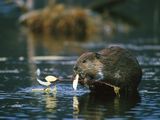
The American Beaver (Castor canadensis)is ane example of a keystone species in North America.
Photo by Michael Quinton / Minden Pictures
Substantive
customs and interactions of living and nonliving things in an area.
keystone mutualists
Substantive
organisms that participate in mutually beneficial interactions, the loss of which would take a profound affect on the ecosystem.
Noun
organism that has a major influence on the way its ecosystem works.
marine ecosystem
Noun
community of living and nonliving things in the ocean.
overgrazing
Noun
process of too many animals feeding on one area of pasture or grassland.
predator
Noun
animal that hunts other animals for food.
casualty
Noun
animal that is hunted and eaten by other animals.
Source: https://www.nationalgeographic.org/encyclopedia/keystone-species/
0 Response to "Keystone Species That Are Predators in a Food Web Can Increase Species Diversity by"
Post a Comment