How Do You Read a Tds Meter
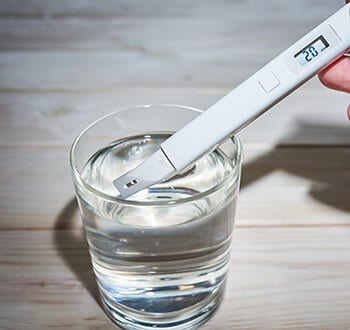 TDS meters are a handy new way to evaluate water quality. Inexpensive, reliable and straightforward to utilize, these must-have digital devices measure contaminant levels in seconds.
But while TDS meters offering a glimpse of what may be lurking in your cup, they don't tell the whole story. Let'southward have a closer look at what TDS meter measures and their capabilities, limitations, and how they fit into your comprehensive h2o condom plan.
What is a TDS Meter?
Total dissolved Solids (TDS) is a measure out of solid substances dissolved in drinking water, including minerals, metals and organic material smaller than 2 microns. Larger particles are called Total Suspended Solids (TSS). The distinction is essential when shopping for h2o filters according to their micron filtration rating.
Total dissolved solids are nowadays in all untreated tap water — they occur naturally in the rock and mineral deposits found in undercover aquifers and human-made sources from agronomical and route runoff to plumbing and wastewater discharge.
Are full dissolved solids safe?
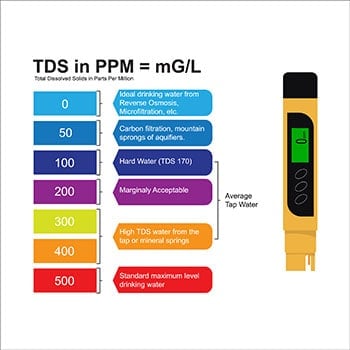
The EPA regulates TDS in municipal tap water supplies, but they set no upper limit, only recommendations. Levels lower than 300 mg/L are excellent and reflect the presence of beneficial minerals like potassium. Water with readings between 300 – 900 mg/L is safety just may have a bitter or metallic taste. TDS level greater than 900 mg/Fifty point probable contagion and should be investigated.
How do TDS meters piece of work?
TDS meters measure the electrical conductivity of h2o. Pure water is a poor usher, but total dissolved solids carry a singled-out electrical charge that correlates directly to TDS levels. The greater the charge — the higher the level of dissolved solids. It'due south the quickest way to get a experience of what in your water.
But meters are non-selective, significant they read only total levels of dissolved solids — they don't measure specific harmful contaminants. They're also not sensitive enough to observe uncharged or low-charged ions similar pb, pesticides, herbicides, petroleum products and trace pharmaceuticals. If you're worried about select toxins, it's like knowing there are fish in your pool without knowing if you're swimming with guppies or Great White sharks.
The bottom line is — TDS meters are a useful screening tool, but they can't tell yous if your water quality is safety to drink.
What Yous Should Know: TDS Meter Reading & Your Drinking H2o
Are High TDS Readings a Reason to Filter Drinking Water?
High TDS levels are not necessarily unhealthy, just they can reflect significant h2o quality problems that would do good from filtration. Hard h2o, for example — water with high levels of calcium and magnesium — has a biting taste and tin be unpalatable to drink. It besides forms limescale deposits in plumbing that can atomic number 82 to loftier utility bills and costly appliance repairs.
Should you buy a TDS meter to exam your tap water?
 TDS meters aren't a substitute for h2o testing, but they tin play an of import role in monitoring your abode water quality.
Since most dissolved solids are likely to exist minerals, gardeners benefit past knowing what they're watering plants with. College TDS levels are beneficial for near flowers and vegetables. Fans of alkali metal h2o and its many wellness benefits are also happy to know what they're drinking.
Similarly, checking levels in fish tanks improves the habitat and keeps testing costs under control. TDS concentrations above 300 mg/L may reduce water clarity and subtract photosynthesis in sensitive aquatic plants. Information technology can likewise contribute to irregularities in aquarium temperature and digestive problems in fish. Aquarium filters only remove Total Suspended Solids(TSS).
Once tested, aquarists tin can test tap h2o with a meter before adding it to the tank, blending information technology with purified water to achieve an ideal TDS balance while saving more expensive test strips but to troubleshoot specific substances. It's a coin saver.
TDS meters are also the perfect tool for evaluating filtration organization functioning. If you have a reverse osmosis system or water softener, low TDS readings verify your filter is working. It's better to know when maintenance is due than to wait for an appliance breakdown to tell you.
Finally, it's not unusual for shallow wells to become contaminated with solids in areas prone to flooding. A quick check with a TDS meter tin can tell you lot if floodwaters take infiltrated your well and further testing is required. Meanwhile, yous tin can keep your family unit safe by switching to bottled.
Meters can as well evaluate municipal water any time in that location'south an unexpected alter. A water main interruption, for example, may cause a sharp rise in dissolved solids that tin can behave potentially dangerous contaminants with them.
If you tin can only beget a water exam or a TDS meter, cull the test. But for less than $20, a meter offers enough peace of listen to be a worthwhile investment.
If you lot already have a TDS meter, you lot're a stride ahead in managing your water safety. But considering older, less sensitive models find fewer dissolved solids with depression electrical charges, y'all'll benefit from an upgrade to more avant-garde technology if your meter is more ii years one-time.
What exercise I do if my h2o is contaminated?
If a TDS meter suggests contagion, it's probably safe to bathe and launder clothes with, but y'all should switch to bottled for drinking and cooking while you arrange a h2o exam. Some problems, especially with municipal water, are only temporary. Other bug may crave a home water filtration system.
Choosing a H2o Test
Any h2o tin can be contaminated regardless of TDS levels. The merely way to know with certainty is to test it — simply it'due south not inexpensive. Comprehensive testing can price hundreds. The trick is to identify which contaminants are more than likely to be present based on your water source and watershed characteristics.
Accept a look at these simple to utilize examination kits.
Municipal Water
Municipal supplies should be biologically safe to potable simply may contain:
- Added fluoride
- Hard minerals
- Residual disinfectants such as chlorine
- Chemical past-products of disinfection, including bromate, haloacetic acids and trihalomethanes
- Emerging contaminants including pharmaceuticals, microplastics and PFAS
- Toxins that enter the water supply after they leave the treatment plants, such as lead from aging underground pipes
Exercise not rely on a TDS meter to detect most of these contaminants except for hard minerals.
Well Water
If yous have a private well, information technology's your responsibility to test it – see how to test your well h2o. Watershed maps can narrow the scope of testing past identifying potential contamination sources near your dwelling, such as farms, industrial centers, landfills, mining operations and more than.
Wells should be tested for leaner, hardness and other harmful contaminants based on watershed risks. Most states suggest comprehensive testing every few years plus periodic monitoring — this is when a TDS meter is helpful because it detects unexpected changes between tests.
Water testing is available through certified laboratories nationwide — it'due south a simple process — or you lot can purchase a reliable DIY kit online at a competitive price.
Final Thoughts
A TDS meter isn't a substitute for a h2o test, but it's one more tool that improves your ability to manage your home water quality. Information technology's inexpensive technology with benefits that justify its cost.
Source: https://qualitywaterlab.com/info/what-is-a-tds-meter/
0 Response to "How Do You Read a Tds Meter"
Post a Comment